
What makes an Archaeological Photograph?
Photographs form a vital part of the site record. Archaeology is a destructive process, and as such it is necessary that the records we create as we excavate are detailed enough and thorough enough. It should have enough detail that someone in the future can examine the records created and understand (and potentially reinterpret) the site almost as if they excavated it themselves.
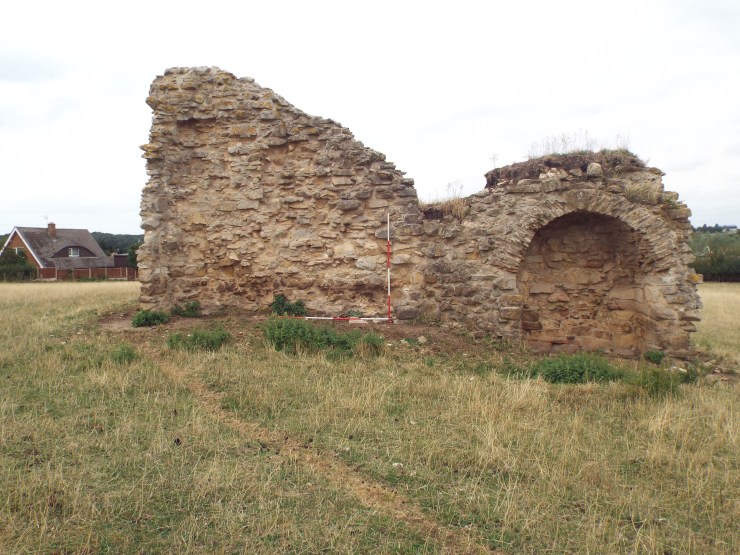
This means an archaeological photograph should include 3 important things:
- A Scale. This should be an appropriate size, show at least on full colour and be placed either horizontally or vertically. Different groups have different rules when taking a photograph with a scale – but generally it is white to the right, and the point either up as the point of the scale bar is an extra length.
- A description of what the image is showing. Where and when is the photo taken? And What is the target of the photo? This has been cropped out of this image.
- The Archaeology. Though it is important to have a scale, and the information, it should not obscure the archaeology!
What stops a Photograph being Archaeological?
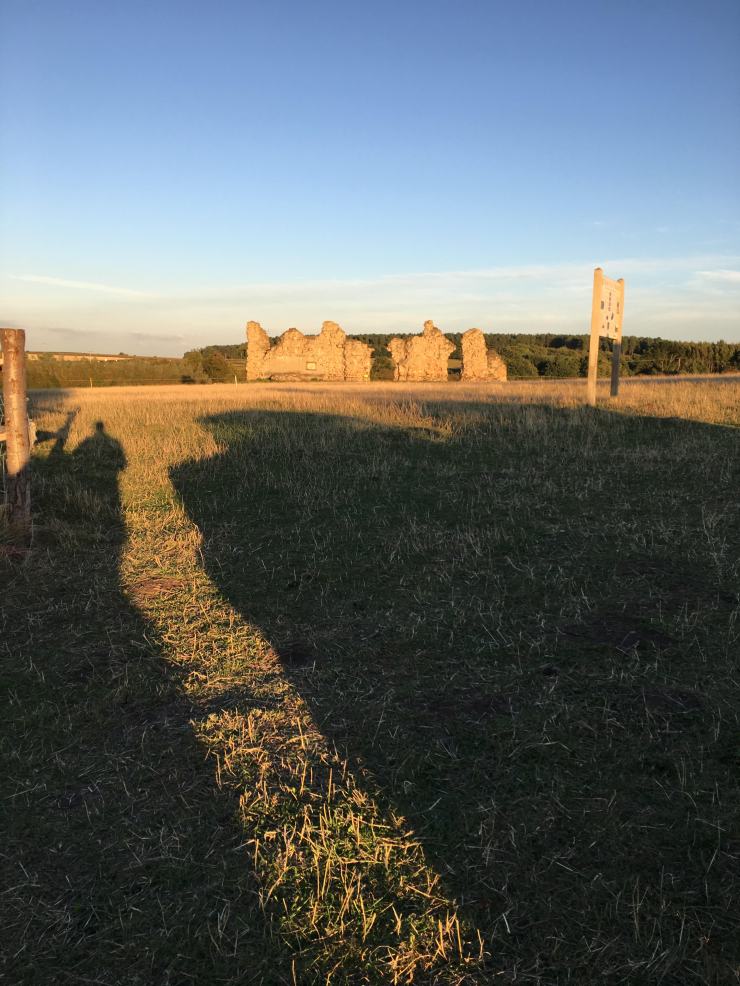
This photo is taken of the south side of the building, though it is a photo of the ruin, it is not an archaeological photo. It does not contain a scale bar or any information explaining what is being shown in the photo. It also contains long shadows which obscure a large part of the photo, as such it is not an archaeological.
Bibliography
Crossley, S., 2015 Archaeological Photographs. Mercian Arcaheological Services CIC
Chadha, A., 2002. Visions of discipline: Sir Mortimer Wheeler and the archaeological method in India (1944-1948). Journal of Social Archaeology, 2, pp.378–401.
Morgan, C., 2016. Analog to Digital: Transitions in Theory and Practice in Archaeological Photography at Çatalhöyük. Internet Archaeology, (42). Available at: http://intarch.ac.uk/journal/issue42/7/index.html.
Shanks, M., 1997. Photography and Archaeology. In B. L. Molyneaux, ed. The Cultural Life of Images: Visual Representation in Archaeology. London: Routledge, pp. 73–107.
 Pub Archaeology